
Why a RONK MSB Meter Main Combo Beats a Separate Meter and Circuit Breaker Setup

Planning a new service? A RONK MSB combines a utility-grade meter socket and main disconnect in one enclosure to save space, reduce field wiring, simplify ordering, and support code-ready residential and light commercial installs.
If you're planning a new electrical service, whether it's a home, a shop, a manufactured housing unit, or a light commercial building, one of the first decisions is how to handle the meter and the main disconnect. You basically have two options: install a separate meter base and a standalone circuit breaker panel, or install one integrated unit that does both. That second option is what RONK Electrical calls an MSB, a Meter Socket with Circuit Breaker combo.
After looking at how these units are built and used in the field, the case for the combo is pretty strong. Here's why.
What a RONK MSB Actually Is
A RONK MSB combines a utility-grade meter socket and one or more molded-case circuit breakers inside a single NEMA 3R aluminum enclosure. Power comes in from the utility, passes through the meter for billing, and then through the breaker, which acts as the main service disconnect for everything downstream. It's rated for use as service equipment, and it's built for either overhead or underground feed depending on the model.
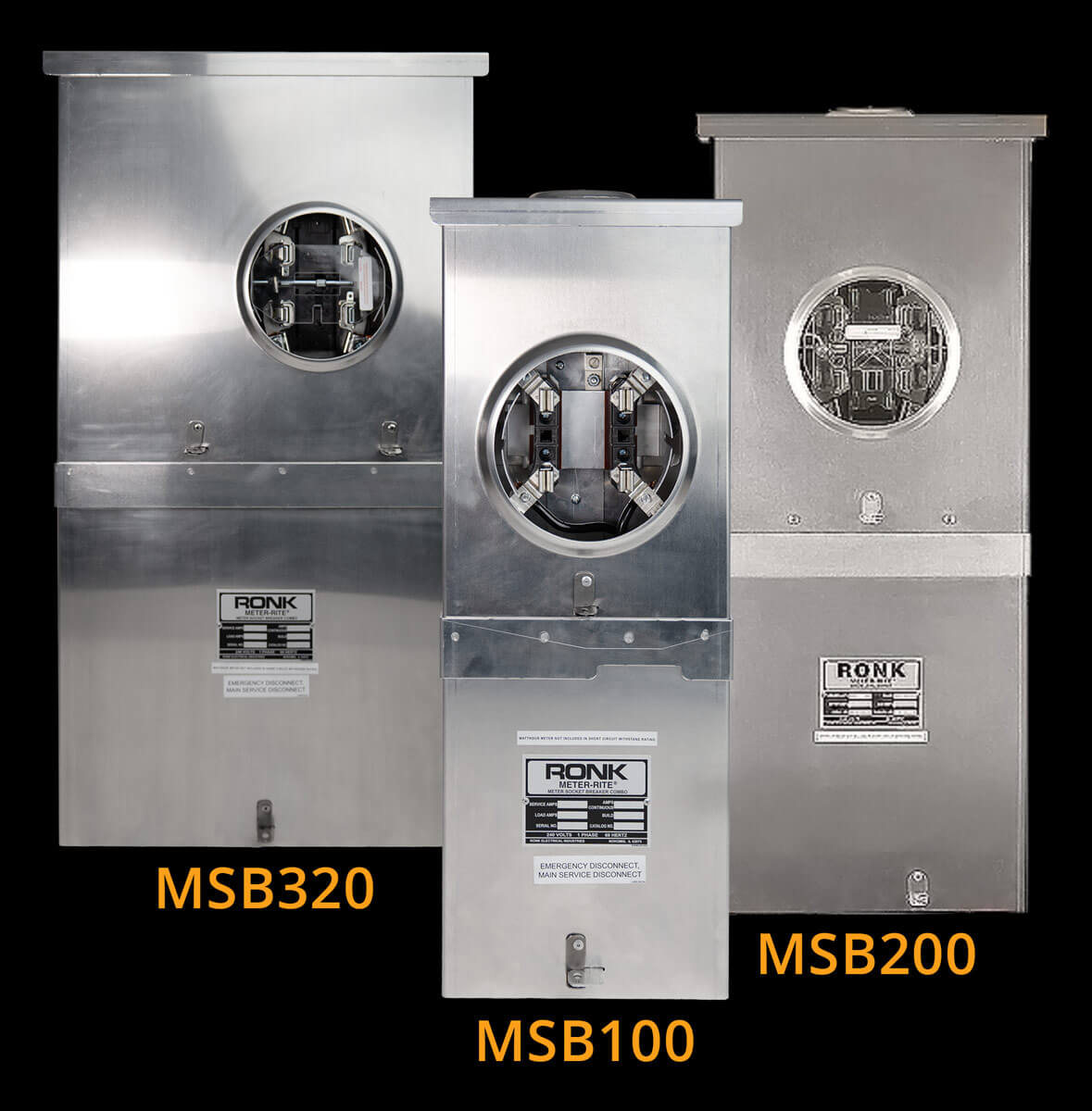
RONK offers these in a range of sizes, from a compact 100A unit up to a 320A version for larger underground services, with options like horn bypass or lever bypass meter jaws, single or multiple load lugs, and a 25K short circuit current rating standard across the line. Every unit also includes a separate cover over the meter section, which keeps the metering compartment isolated per NEC 230.62.
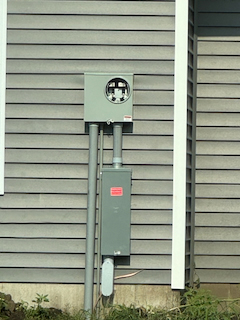
Compare that to the traditional approach: a separate utility meter enclosure, its own conduit run, and a standalone breaker panel wired in afterward as two distinct pieces of equipment that a contractor install, connect, and coordinate on site.
1. One Enclosure Instead of Two Means Less Field Work
This is the most immediate difference. With a separate meter and breaker setup, an electrician mounts two enclosures, runs conduit between them, and makes a full set of terminations at each end. With an MSB, that's all done in one box. Fewer enclosures means fewer conduit penetrations in the wall, less hardware to mount and level, and fewer places where a wiring mistake can happen. On a job with a tight schedule, that adds up to real time saved and time saved is money saved, both in labor hours and in the number of trips a crew has to make to close out an inspection.
2. Smaller Footprint, Lower Material Cost
Every square foot of wall space at a service entrance matters, especially on retrofit jobs, mobile home installs, or sites where the utility connection point is already tight. A single combo unit takes up meaningfully less wall space than two separate enclosures plus the conduit between them, and it uses less raw material overall, one enclosure, one back pan, one set of mounting hardware instead of two of each. For manufactured housing, construction power pedestals, and other compact installations, that smaller footprint is often the deciding factor.
3. Fewer Connection Points, Fewer Failure Points
Every splice, lug, and termination in an electrical system is a place where something can eventually go wrong, a loose connection, a missed torque spec, corrosion at a joint. A separate meter-and-panel setup requires an extra full set of terminations between the two enclosures. An MSB eliminates that entire connection point because the meter socket and the breaker are already bonded together inside one factory-built assembly. Less field wiring between components also means less opportunity for an installer to make an error that shows up later as a nuisance trip or, worse, a safety issue.
4. Built-In Code Compliance
The 2020 NEC added Section 230.85, requiring an emergency disconnect in a readily accessible outdoor location for one- and two-family dwelling services. Combo units like RONK's MSB line are engineered specifically to satisfy that requirement. The disconnect is already outside, already accessible, and already integrated with the meter, so there's no separate design decision needed to meet the rule. A separate meter-and-panel arrangement can also comply, but it takes deliberate placement and coordination to get there, rather than getting it by default with a listed combo unit.
That single exterior shutoff point also matters for first responders and utility crews: in an emergency, they can de-energize the entire building from outside without needing to enter the structure.
5. Simpler Procurement, Less Risk of Mismatched Parts
When you buy a meter base from one supplier and a breaker panel from another, you're responsible for making sure the two are compatible same amperage capacity, compatible knockout patterns, matching enclosure ratings, adequate short circuit current rating, and so on. Get any of that wrong and you're looking at a field change order or a failed inspection. Because a RONK MSB is engineered and factory assembled as one unit, all of that compatibility work, breaker rating, jaw configuration, enclosure rating, SCCR is already resolved before it ever reaches the job site. You place one order for one part number instead of juggling two separate specs from two separate manufacturers.
6. Purpose-Built for the Environment
RONK's MSB enclosures are aluminum, NEMA 3R rated, and corrosion resistant. Designed to hold up outdoors through rain, snow, and general weather exposure over years of service. Because the unit is purpose-built as a combo rather than assembled from two separate general-purpose products, the whole enclosure, meter section and breaker section alike, is designed to the same environmental standard from the start, rather than depending on whichever panel happens to get paired with whichever meter base.
When a Separate Setup Might Still Make Sense
To be fair, a combo unit isn't the right call for every project. Larger commercial or industrial services that require CT metering, higher amperages beyond what a direct-connect combo supports, or unusual utility-specific configurations may need a different equipment path, a meter center, a CT cabinet, or switchgear built to those specifications. And in all cases, utility approval comes first: any meter equipment, combo or otherwise, has to be on the serving utility's approved list before it goes in the ground.
But for the large majority of residential, light commercial, manufactured housing, and temporary power applications in the 100A–320A range, a RONK MSB gets you utility-approved metering and a code-compliant main disconnect in one listed, pre-engineered enclosure, with less field labor, a smaller footprint, fewer connection points, and one part number to specify instead of two.
The Bottom Line
A separate meter base and circuit breaker panel can get the job done, but it asks the contractor to do the integration work that a combo unit already has done at the factory. A RONK MSB folds the meter socket and the main breaker into a single, utility-approved, code-ready enclosure, which typically means a faster install, a smaller footprint, fewer points of failure, and one less thing to get wrong before final inspection.
Always confirm amperage rating, bypass configuration, and utility approval with your local utility before specifying any meter main combo for a project.